What Changes My Slope Next?
September 8th, 2026
Over the past 9 years, I've spent a lot of time thinking about growth. In my career, in the things I build, and the things I do outside of work.
It’s easy to describe where I am today. My job title, how much I workout, my net worth. Those things are visible and relatively easy to understand.
I’m more interested in how they’re changing, and what I can do to influence that.
This is how I think about growth: the different forms it takes, a mental model for understanding it, five principles I try to use, and a few examples from my own life.
Types of growth
Growth can mean a lot of things.
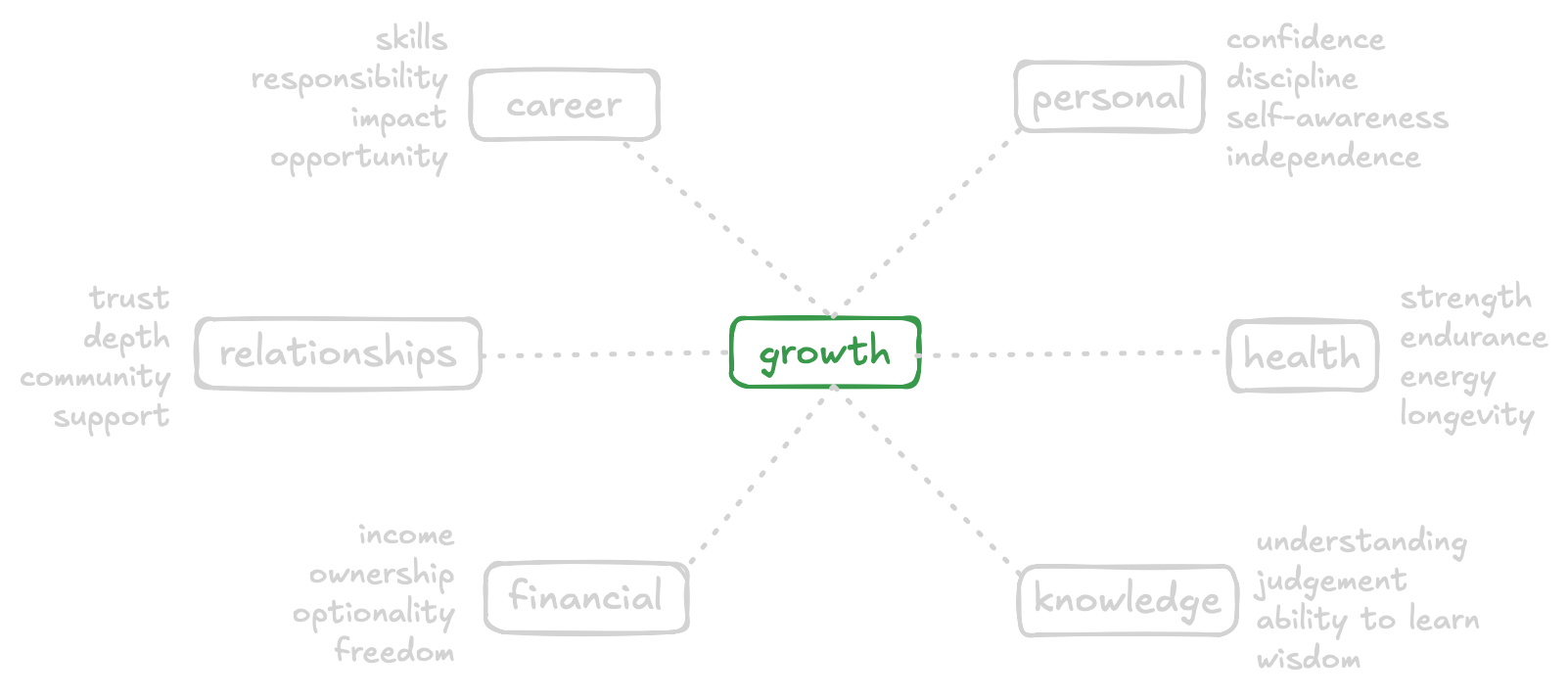
In my career, it might mean developing skills, taking on more responsibility, or increasing my impact. Financially, it might mean having more freedom to choose how I spend my time. In my relationships, it might mean building trust, becoming a better partner, or finding a community I feel part of.
For my health, it might mean building strength, endurance, energy, and the ability to keep doing things I enjoy. Personally, it might mean growing in confidence, discipline, self-awareness, and judgement.
These things overlap. Learning something difficult can build confidence that carries into another part of my life. A relationship can introduce me to an opportunity I wouldn’t have found myself. Becoming more capable at building software makes it easier to try the next idea.
I don’t have to pursue all of them equally. But it helps to be clear about which ones matter to me.
The mental model
I think about growth as a function of a few inputs:
Time, effort, environment, skills, relationships, risk, and luck.
There’s no useful equation that tells me exactly how much each contributes. Effort is only one input. Working harder can help, but so can changing my environment, getting better feedback, choosing a different problem, or applying a different strategy.
Imagine plotting progress over time. My current position is a point on that graph. The slope tells me how quickly I’m improving. Changes in that slope tell me whether my approach is becoming more effective.
The curve is much more interesting than any given point.
Growth also doesn’t always follow a straight line. I can put in effort for a while without seeing much happen, then reach a point where things start connecting.
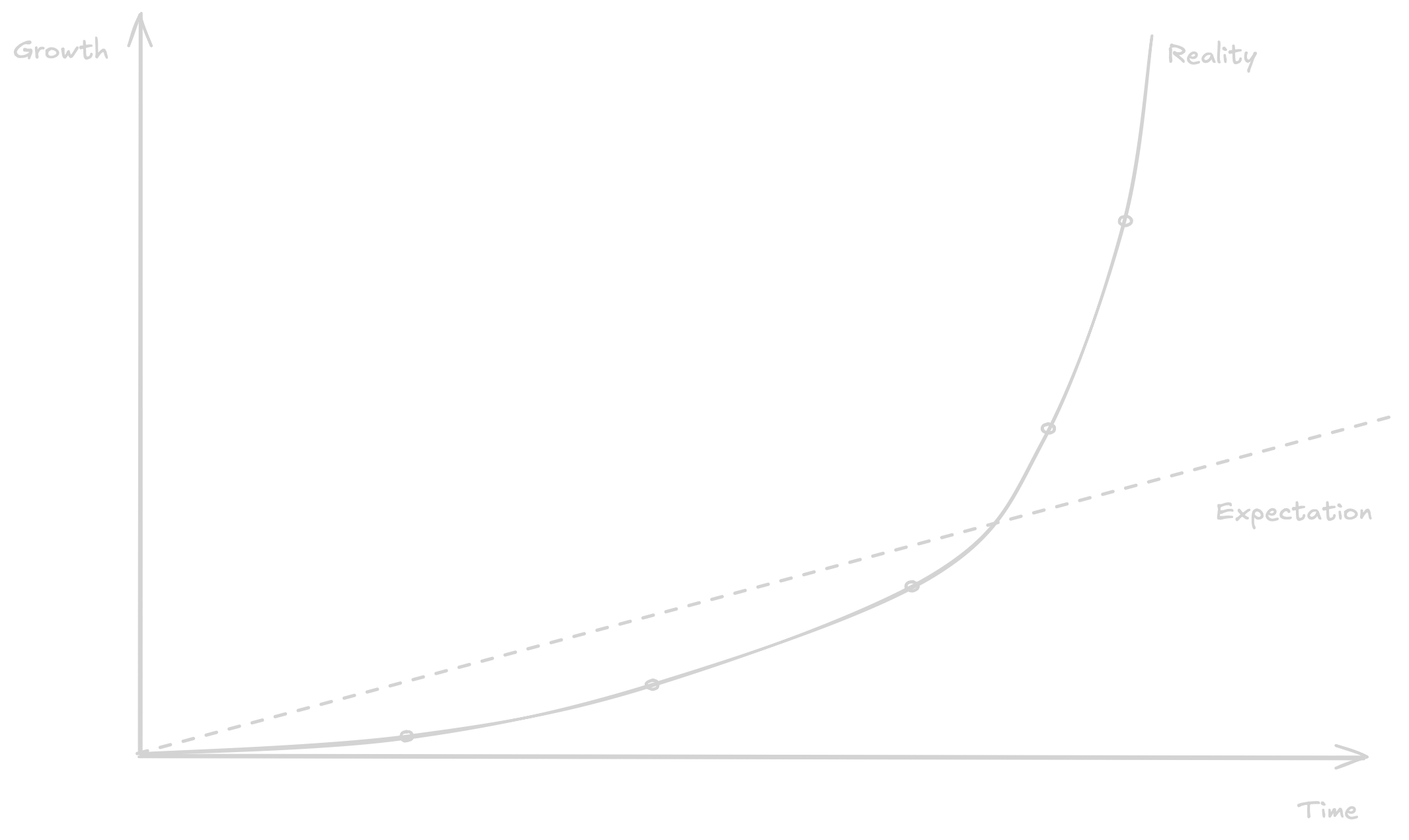
That doesn’t mean the starting position is irrelevant. It affects the choices available to me. But a snapshot leaves out a lot. Someone who looks far behind today might be learning quickly. Someone who looks successful might have stopped developing years ago.
Some inputs create disproportionate output.
Five principles I try to use
1. Backtrack from the destination
I start with the outcome I want, then keep asking: what needs to be true?
I’d like to finish my next Olympic triathlon in under three hours. That’s a clear destination, but it doesn’t tell me what to do tomorrow morning.
Working backwards makes it more useful.
To get there, I need to be more comfortable cycling and running long distances under race conditions. That requires consistent training. Working backwards, that meant making room for around 7 hours a week, then going to bed and waking up 30 minutes earlier.
The exact numbers will change as I learn. The useful part is connecting a distant outcome to something I can actually do today.
I’ve used the same process for career goals. When I wanted a more senior role, I asked what I’d need to be capable of doing. Then I asked which responsibilities would help me develop that capability, and where I could start taking them on.
Eventually, “I want to get there” becomes a concrete next step. I can have a destination while still changing the route.
2. Optimize for slope, not position
I choose environments where I learn faster, not just ones where I look good.
That might mean working with people who are much better than me, taking on a problem I don’t already know how to solve, or accepting that I’ll feel inexperienced for a while. Those choices don’t always make me look impressive immediately. But I think learning rate deserves more weight than we usually give it.
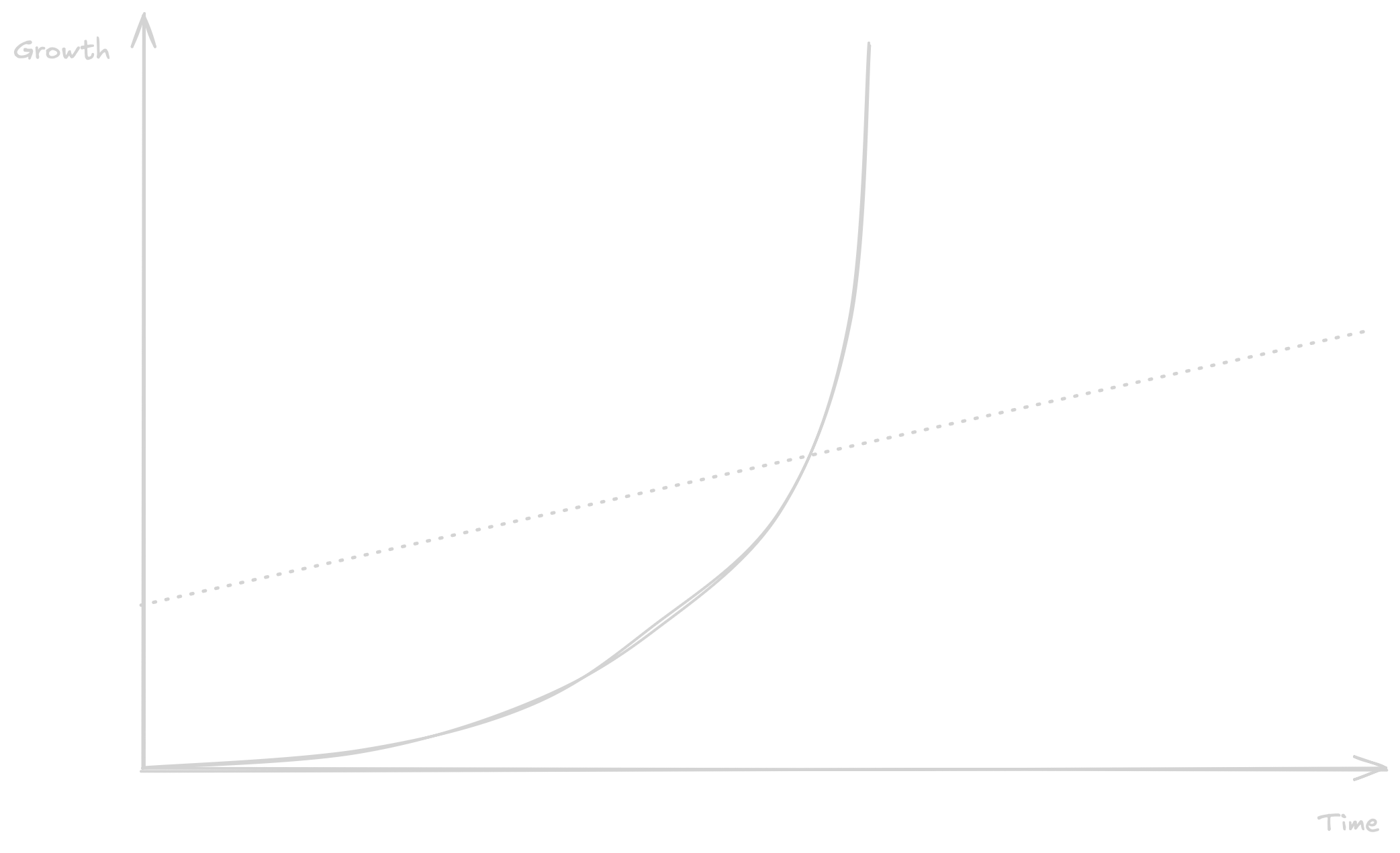
I’m less interested in collecting individual wins than in becoming someone who wins. A single result is just a point. The more useful question is whether I’m becoming the kind of person who keeps producing better ones.
A useful way to evaluate an opportunity is to ask what a year there would do to me. What would I learn? Who would give me feedback? What would I be trusted to own? What would become possible afterwards?
My environment shapes all of those things: what feels normal, what I notice, and what I expect from myself.
3. Increase surface area for luck
I can't control luck, but I can control how often it finds me.
I meet someone at the right time. A project reaches someone I didn’t know was watching. A conversation changes what I decide to work on.
I can’t manufacture those outcomes. I can create more opportunities for them to happen.
Meet more people. Try more projects. Share more ideas.
A project that stays on my laptop has very few ways to surprise me. Once I put it in front of people, they can use it, criticize it, suggest something better, or connect me with someone else. The same applies to writing: putting an idea into words helps me understand it, and sharing it gives other people a chance to respond.
None of this guarantees a lucky break. It gives chance more places to enter my life.
4. Own things that compound
I don't just work, I accumulate.
Skills do this especially well. Once I know how to build and ship something, I don’t really forget it. I keep that capability while learning the next one. The floor rises, that level becomes the new baseline, and the next project starts from a different place.
Relationships can work this way too. Trust develops through repeated experiences. As a Russian friend likes to say: «Сначала ты работаешь на репутацию, а потом репутация работает на тебя» — first you work for your reputation, then your reputation works for you. Code, systems, and content can keep helping people beyond the hours spent creating them.
Ownership matters for a similar reason: my participation in an outcome can extend beyond the time I personally contribute.
The question I find useful is: what will remain after this work is done?
Sometimes the answer is a completed task, and that’s enough. Other times, there’s an opportunity to leave behind a tool, a reusable approach, a clearer explanation, or someone who can now do the work independently. As an engineer, that’s one of the things I enjoy most.
5. Failure is okay
Not all bets pay off. The ones that do pay for the ones that don’t (and then some).
Trying more things means some of them won’t work. A project might get no traction. An opportunity might be a poor fit. I might put serious effort into something and still get a disappointing result.
I want to take bets where I can handle the downside and where success would matter. A small project might cost a few weekends. It could also lead to useful skills, relationships, users, or a much bigger opportunity. That can make it worth trying without knowing how it will turn out.
The process matters: take the shot, limit what I can lose, learn quickly, keep what worked, and move on when it makes sense.
It’s also worth separating the quality of a decision from its outcome. A reasonable bet can fail. A careless one can get lucky. Looking only at the result makes it harder to learn the right lesson.
I’d still rather keep making thoughtful attempts than wait until I’m certain something will work.
What this looks like in my life
Career: increasing the scope of what I can do
Early in an engineering career, a lot of progress comes from becoming dependable. I learn the tools, finish things, ask better questions, and build trust.
Over time, the opportunity expands. I start seeing problems shared by several people. I can deliver more independently. I develop enough technical depth to make decisions about which work is worth doing.
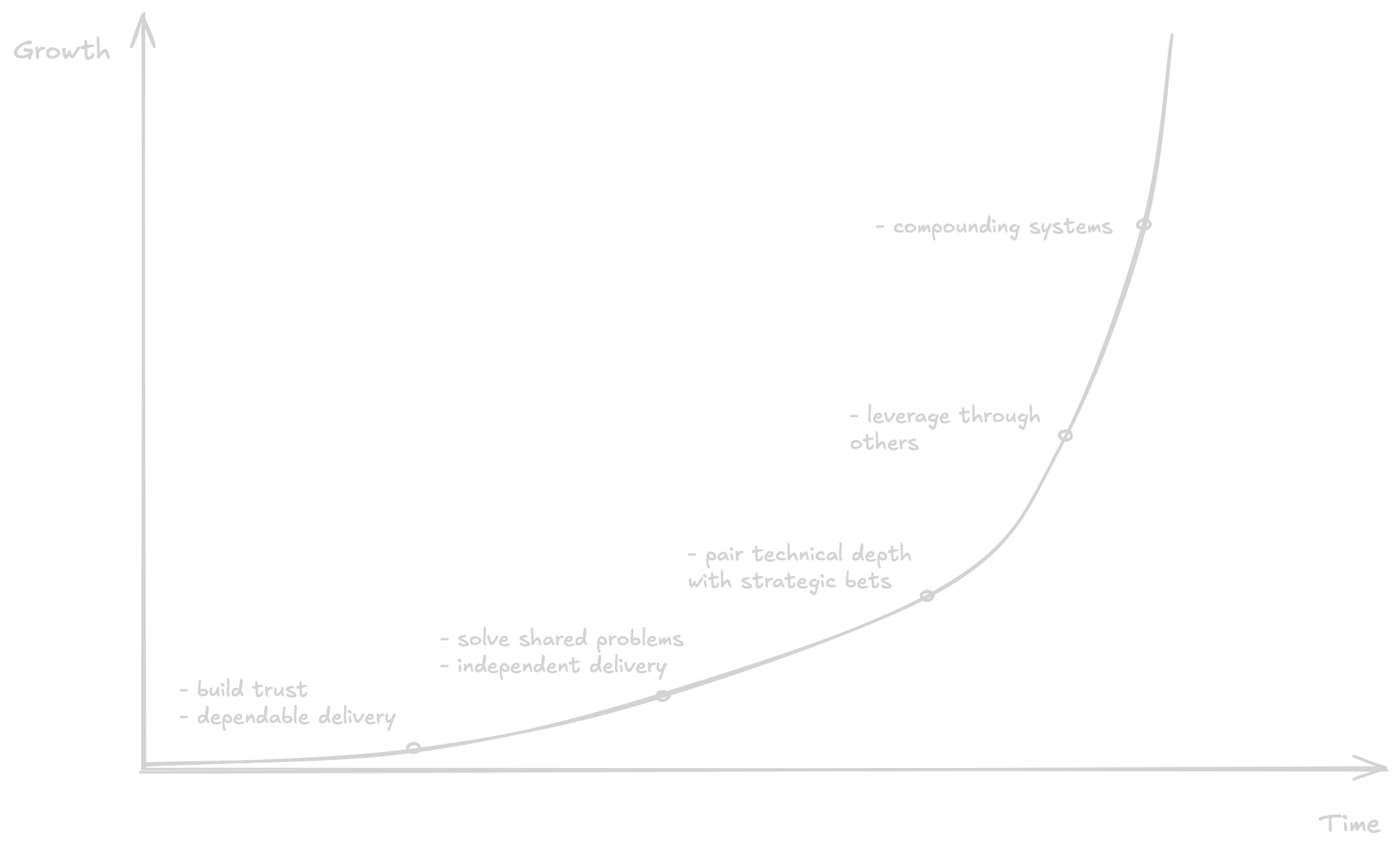
At Faire, that has included frontend performance work, migrations, and tooling that helps other engineers build more effectively. Some of the most useful work has involved making an approach repeatable through infrastructure, documentation, and mentoring. I’ve written more about those projects on my work page.
At staff level, impact stops being mostly about what I ship myself. There’s a ceiling on how much code one person can write. The higher-leverage work is multiplying other engineers: setting direction, clearing paths, and building systems that raise the output of the org even when I’m not in the room.
Health: unfit to triathlete
Fitness has given me a very different place to apply the same ideas.
Earlier this year, I could barely run a 5k. My heart rate hit 195 and I almost didn’t finish. This summer, I completed my first Olympic triathlon. Beyond that, the line becomes dotted: a half Ironman and an Ironman are possibilities ahead.
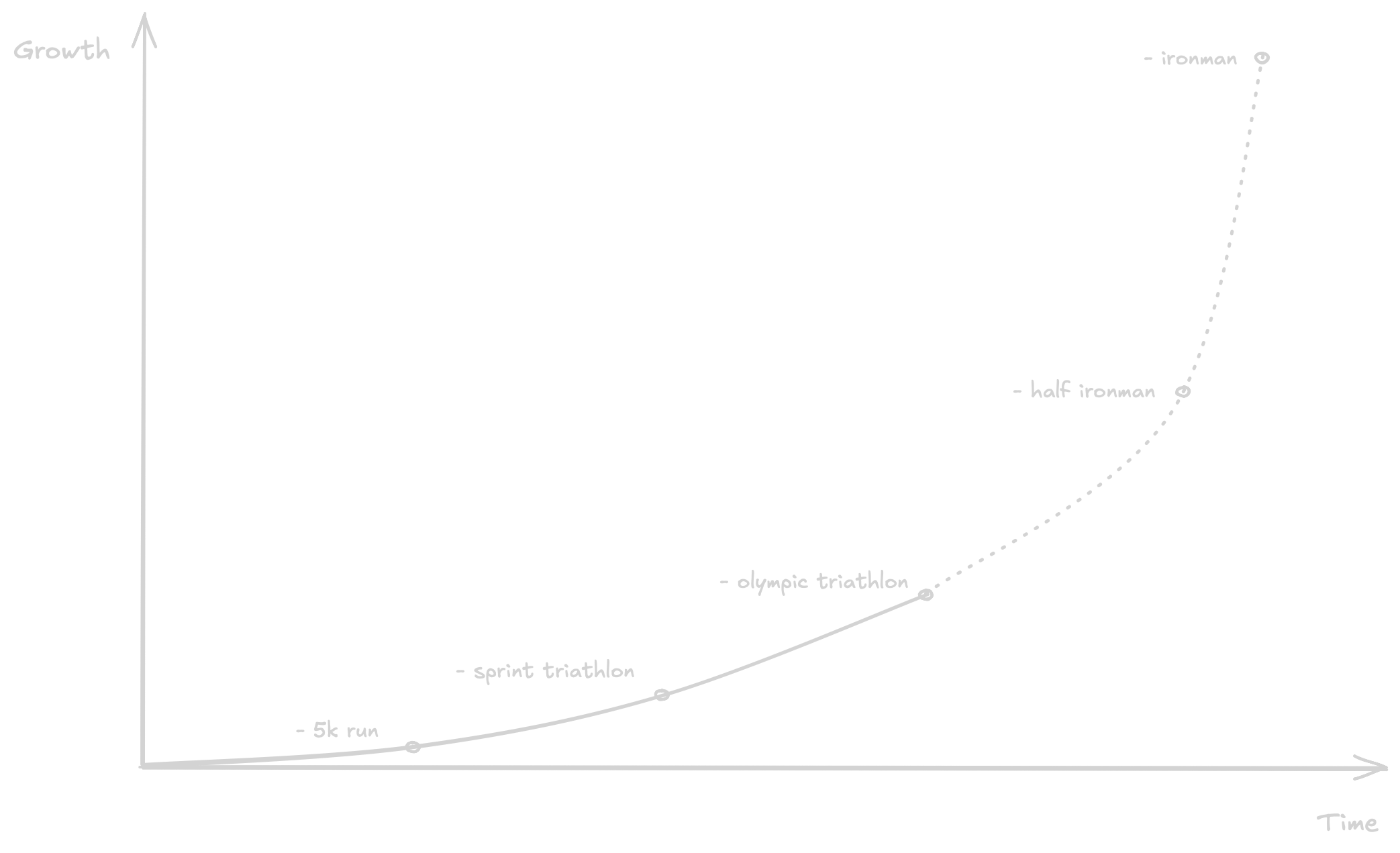
On August 29, 2026, I finished the Wasaga Beach Olympic triathlon in 3:40:15.
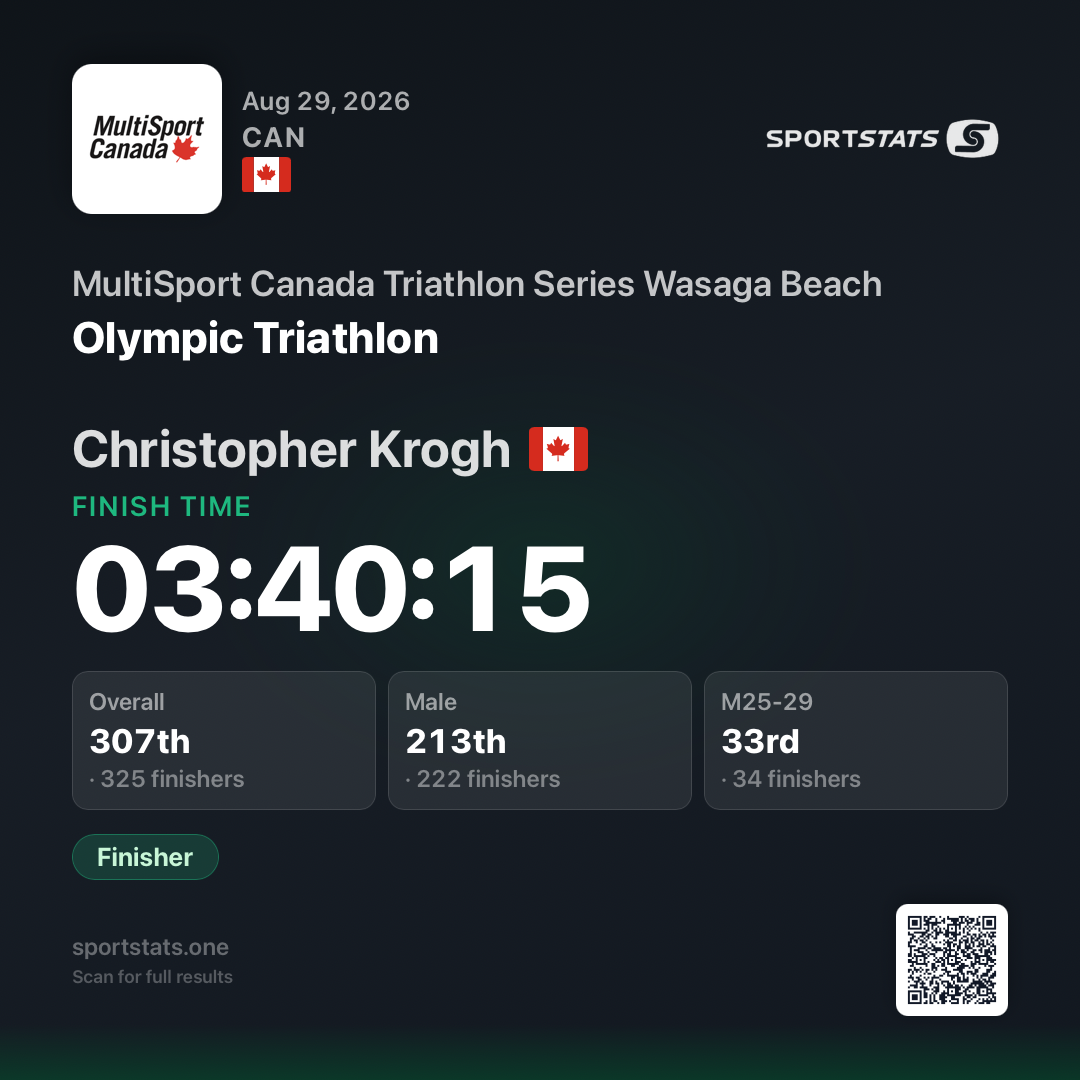
It was much harder than I expected.
I had serious discomfort on the bike after about 20 km and struggled with cramping during the run. I finished 307th. There’s plenty of room to improve.
But that result also gave me something specific to work with. I now have experience of the race itself, a clearer sense of what was difficult, and things I want to prepare differently next time.
I want to do the same race next year and see what changes.
Entrepreneurship: zero users to one user
I shipped Vings, a personal finance app. It’s a product I built across web and mobile, and it’s also something I use myself.
The label is deliberately modest: zero users to one user.
That one user is me.
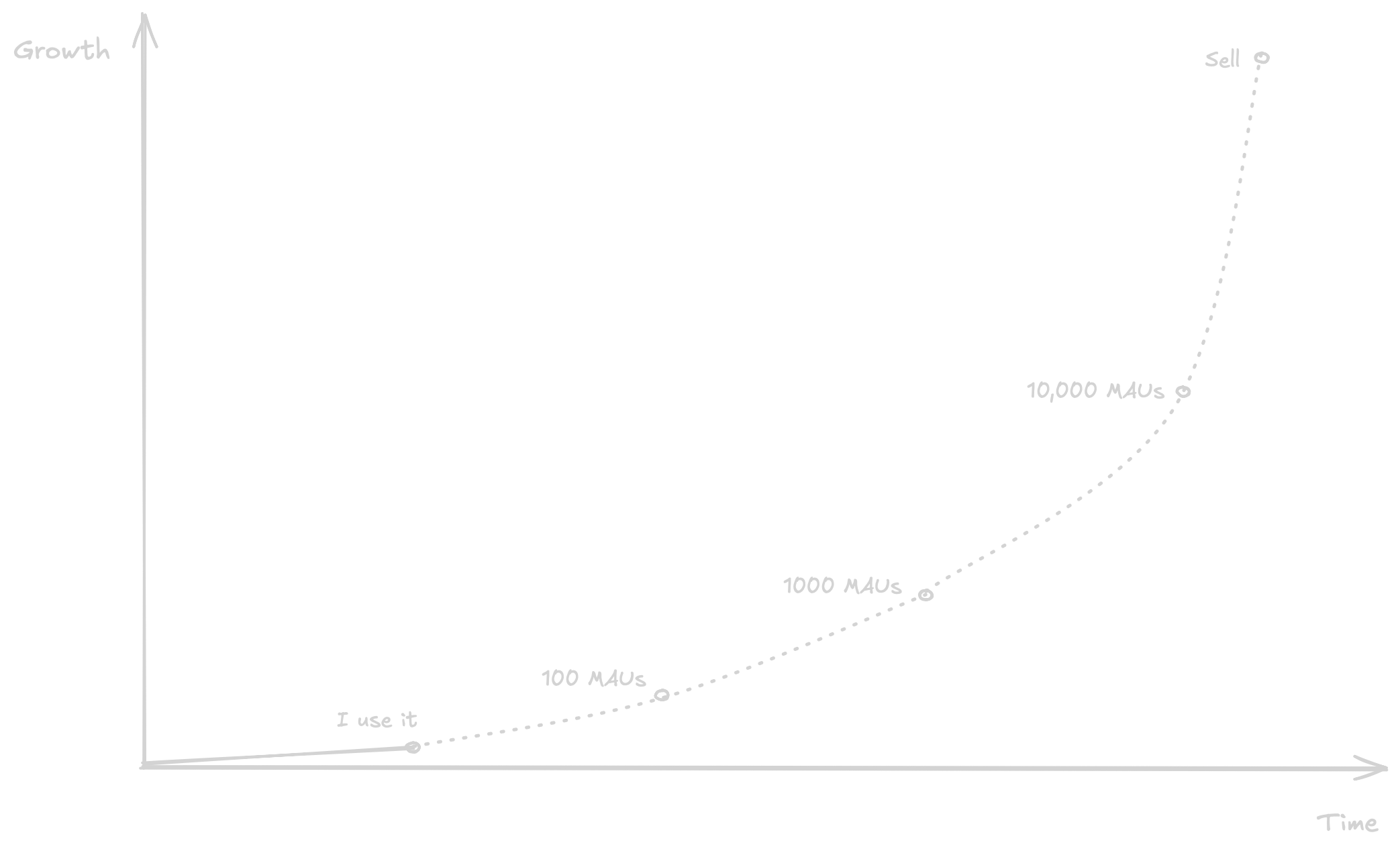
The rest of the curve is dotted. A hundred monthly active users, a thousand, ten thousand, a potential sale. Those are possible future milestones. The part that exists today starts with making something useful enough that I want to use it.
I’m at different points on each of these curves. Building the product has already given me something to test and improve, exercised skills beyond my day job, and created a foundation I can build on.
Whether it becomes a larger business is still an open question. Shipping it gives me a way to find out.
The less visible parts
I’ve also moved from debt to a positive net position, and from being single to being happily married.
Those matter to me alongside work and fitness. They’re a reminder that growth includes things that don’t fit neatly into a chart, and that the value often shows up in what those changes make possible day to day.
What changes my slope next?
It’s tempting to assume that whatever got me here will keep working.
Sometimes it does. Sometimes I get comfortable, stop seeking feedback, or keep repeating work that no longer teaches me much.
That’s a useful moment to look again at the inputs. Maybe I need a different challenge, more consistency, a better environment, or a small experiment that gives me new information.
I don’t need to know the shape of the whole curve. But I can choose the next thing I want to influence.
What changes your slope next?